


Visual artist / theorist

Milica
Bravačić

Seeing is an encounter
with the (yet) invisible.

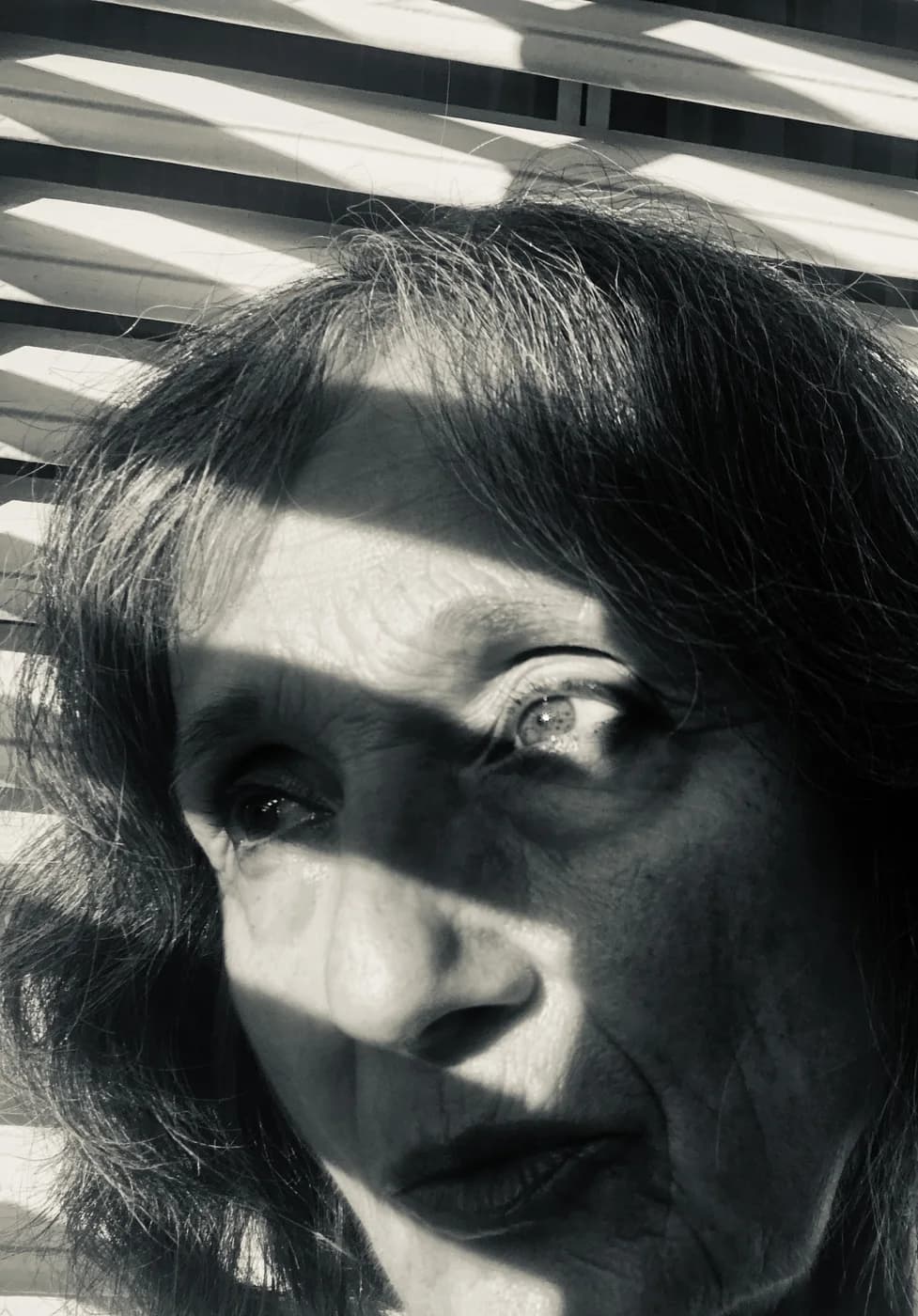
Black and white portrait of Milica Bravačić 1
Black and white portrait of Milica Bravačić 2
Black and white portrait of Milica Bravačić 3
Black and white portrait of Milica Bravačić 4

The moment a new image enters our eyes, the mind instantly begins its search. By tracing familiar contours, textures and colours it assigns them meaning before awareness even registers the sight. Whether it is a tone, a word, or a fully formed mind visual, these automatic mental associations shape what we call perception into a vibration between the raw gaze and its internal projection.

As a visual artist and theorist, my practice explores this very threshold - observing it as a complex adjustment between memory and new experiences, employing the eye not just as a lens but as a negotiator of our reality.

Latest / Selected project

Dubrovnik · 2026

Circular Way
of the Cross

A cross-shaped installation that shifts its atmosphere depending on the lighting, changing its meaning relative to the viewer's point of view. It emphasizes the confrontation between the front and the back, the seen and the unseen, and the private versus the global, putting the singularity of inner struggles into perspective against the genocide of the entire Palestinian people.

Height
2 meters
Location
Dubrovnik
Exhibitions
Mysterium Crucis, Dulcic Masle Pulitika Gallery
Group exhibition · March 2026
Church of the Holy Annunciation
August 2026

Cycles

Milica Bravačić completed her Bachelor’s (1982) and Master’s (1985) degrees in Visual Arts at the Belgrade Faculty of Fine Arts. Since then, her artistic and theoretical practice has spanned over four decades.

  1. 1981–1985

    Belgrade

    While still studying, Bravačić explored various techniques using mixed-media layering on paper or photographic prints, applying heavy pressure with oil pastels. Reminiscent of archaeological excavation, this process uncovered hidden layers of color beneath superimposed, thick textures of pastel paint. These textures formed anecdotal pictorial shapes evocative of subconscious imagery—resembling proto-animals and plants—or shifted into simple compositions of abstract atmospheres.

    Exhibition

    1983: SMALL FORMAT, first solo exhibition in Belgrade.

  2. 1985

    Dubrovnik

    The MA exhibition Dubrovnik was dedicated to the artist's hometown. Conceptualised as a basilica floor-plan with a rectangular image of The Big Puzzle as the altarpiece, this setup creates a solemn atmosphere that questions our relationship to the worship of tradition. The architectural shapes of the Romanesque, Renaissance and Baroque styles inspired the rosette, diptych and polyptych oil on canvas paintings, elegantly enclosing the Medieval-like phantasmagoric narratives.

    Exhibition

    1985: DUBROVNIK, M.A. exhibition at the Belgrade Faculty of Fine Arts University Gallery.

  3. 1988

    Lisbon

    As a recipient of the Yugoslav state scholarship, the artist resided in Lisbon, Portugal, where she became mesmerized by the vividness of traditional decorative street tiles, known as azulejos. Bravačić integrated their authentic, intricate designs into her work, stamping them as mono-prints onto large-scale, handmade paper sheets. These took the form of irregular mega-posters, intentionally ragged and weathered to look worn out by outdoor elements. This series of acrylic paintings evoked urban murals or pictorial tapestries woven by street life itself, while carrying metaphors of the nation's post-Salazar recovery.

    Exhibition

    1988: Solo exhibition in Lisbon, Calouste Gulbenkian Foundation, Modern Art Galleries.

  4. The 1990s

    Alice O’Wonderland

    In the 1990s, the artist was engaged in commercial projects mainly related to home textiles and children’s wear design through her company, Alice O’Wonderland, based in Belgrade. During this politically and socially tragic period of the break-up of Yugoslavia, Bravačić was an active participant in protests against the regime through student street demonstrations and conceptual art protests organized by the Led Art group and artist Nikola Dzafo.

  5. 2000–2020

    Singapore

    Bravačić returned to painting while simultaneously launching a successful educational career, specializing in global portfolio preparation for prospective art students, primarily targeting those in Singapore. Alongside running "Milica – Art Courses" (2000–2020), she held various teaching positions at the country's leading art colleges.

    In a creative echo of her Portuguese cycle, her time in Singapore introduced her to another type of tile design adorning the city's vibrant heritage streets. This encounter deeply enriched and furthered her dedication to tile motifs—this time drawing from eclectic Peranakan tiles. Utilizing a similar style to her Lisbon period, she applied hand-touched details over hand-printed areas.

    2006Singapore

    Retrosquares

    Later in 2006, a solo exhibition titled RETROSQUARES followed at The Arts House gallery in Singapore. The exhibition displayed paintings that combined the monoprint technique of stamped Peranakan tile ornaments with various elements of Chinese symbolism. Through an intricate interplay between singular, small canvases, a larger visual whole was assembled, resulting in unusual polyptych compositions.

    2007Singapore

    Retrorides

    In 2007, the Retrosquares exhibition expanded to include the Retrorides series—pencil drawings of 13 classic cars set against a background of Peranakan tile monoprints.

    2009Singapore

    Retrosilks

    In 2009, Bravačić extended her monoprint interpretations of Peranakan tile motifs from canvas and rice paper to silk. Inspired by the historic shophouses of Singapore, these hand-printed, semi-transparent textiles bring ornamental patterns into dialogue with light and space. The subsequent exhibition Post Scriptum toured Europe, presenting the silk pieces as installations within metal tubes. The series later developed into custom-made art textiles in pure Habutai silk.

    View catalogue
    2006Singapore

    Murals

    In 2006 Bravačić created an impressive mural titled Blair Rd., a collage of tile patterns spanning an 8-meter-long wall at Esplanade – Theatres on the Bay in Singapore. Named after one of the most famous Peranakan streets in the city's oldest district, the mural was launched alongside the exhibition The Shape that Is in Esplanade’s Jendela Gallery. There, Milica displayed three prominent polyptych compositions alongside the work of two renowned Asian artists, Bose Krishnamachari from India and Pacita Abad from the Philippines. From 2006 to 2018, the Blair Rd. mural served as an iconic gathering spot for theatregoers and concertgoers.

Collaborations

Selected projects

Tegula

Tile trails / sequence

Explore the full Tegula project

Art Theorist

The artist’s critical practice follows the same questions as her visual work: how images gather meaning, how perception is conditioned, and how memory enters the act of looking.

2000–2020Singapore

Milica – Art Courses

Global portfolio preparation for prospective art students, alongside teaching positions at Singapore’s leading art colleges.